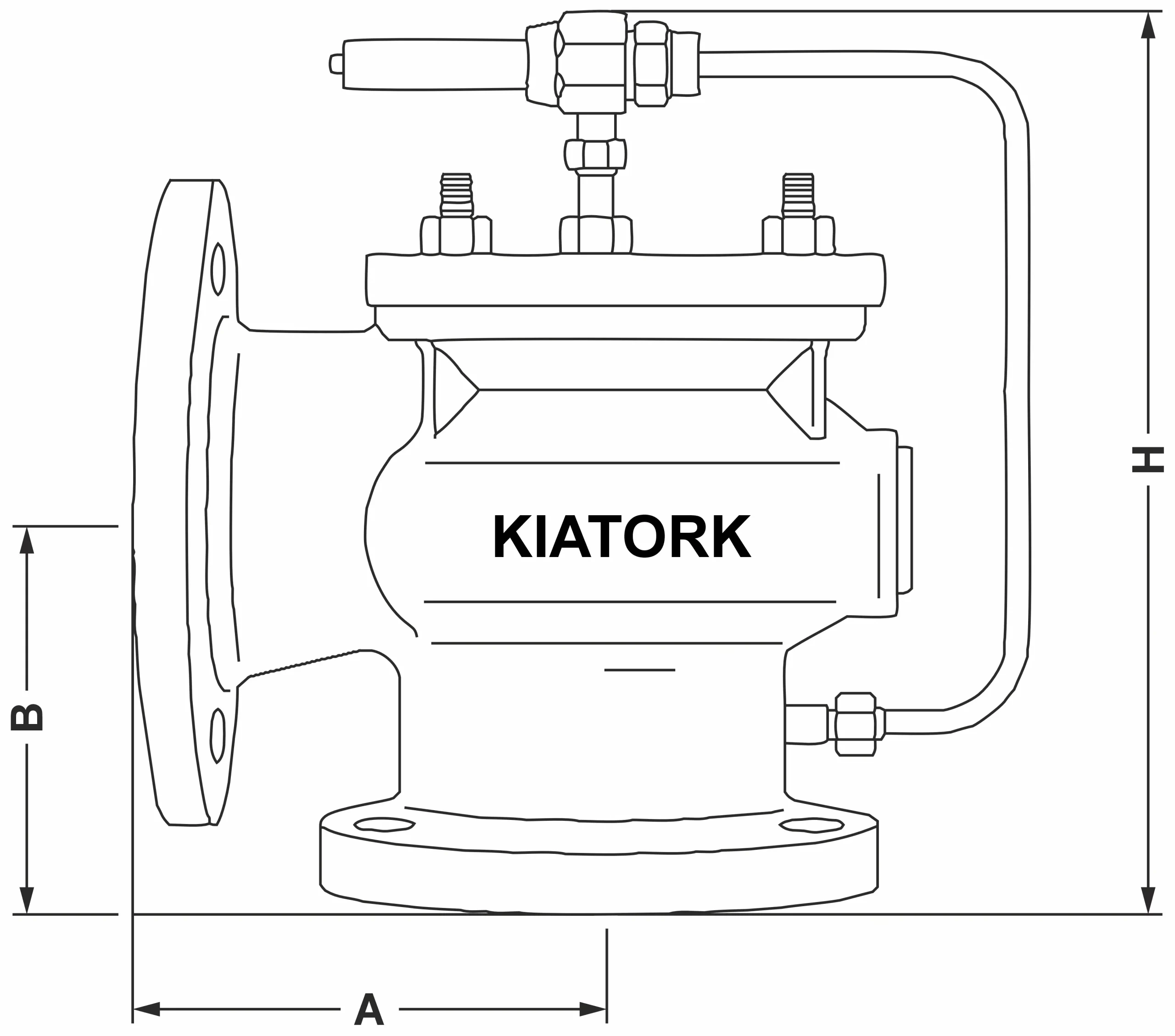
Pilot Controlled Series
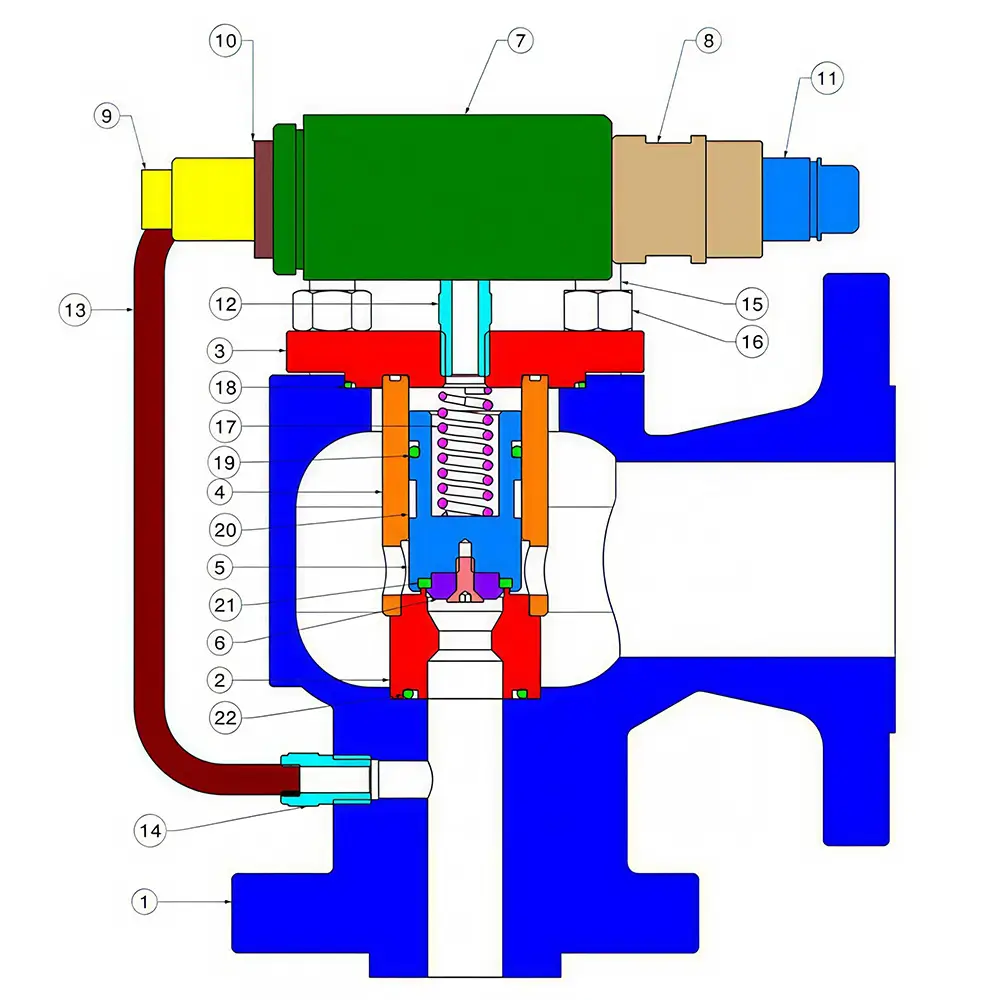
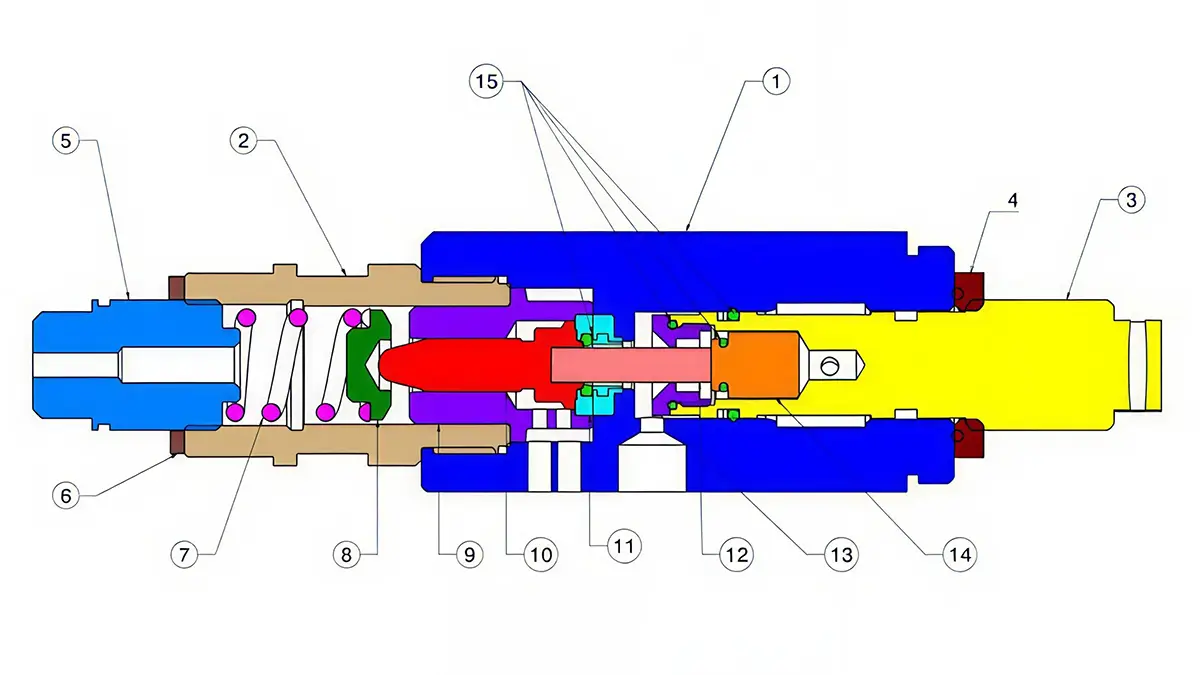
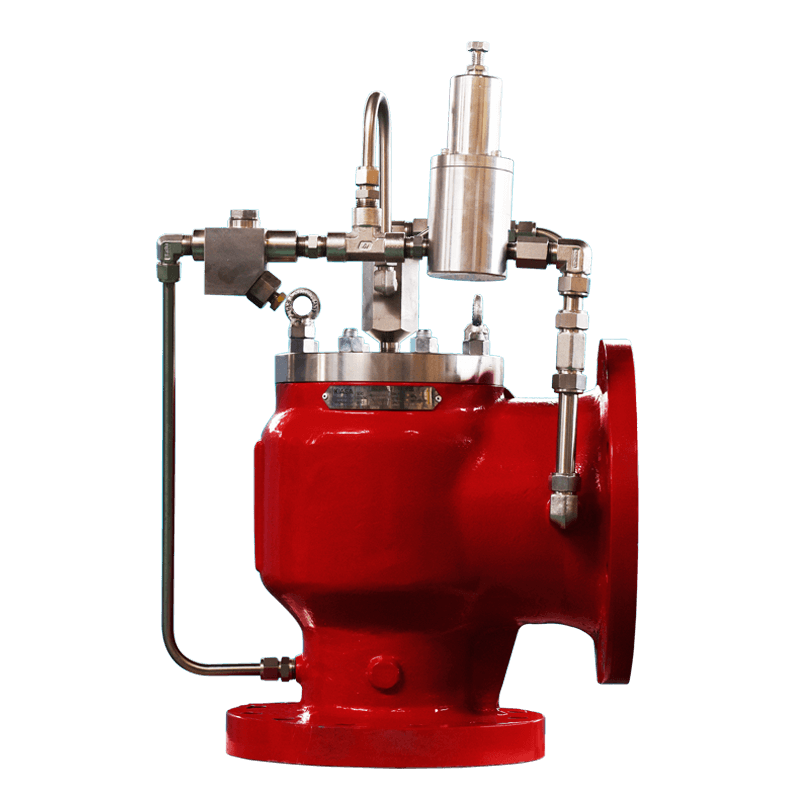
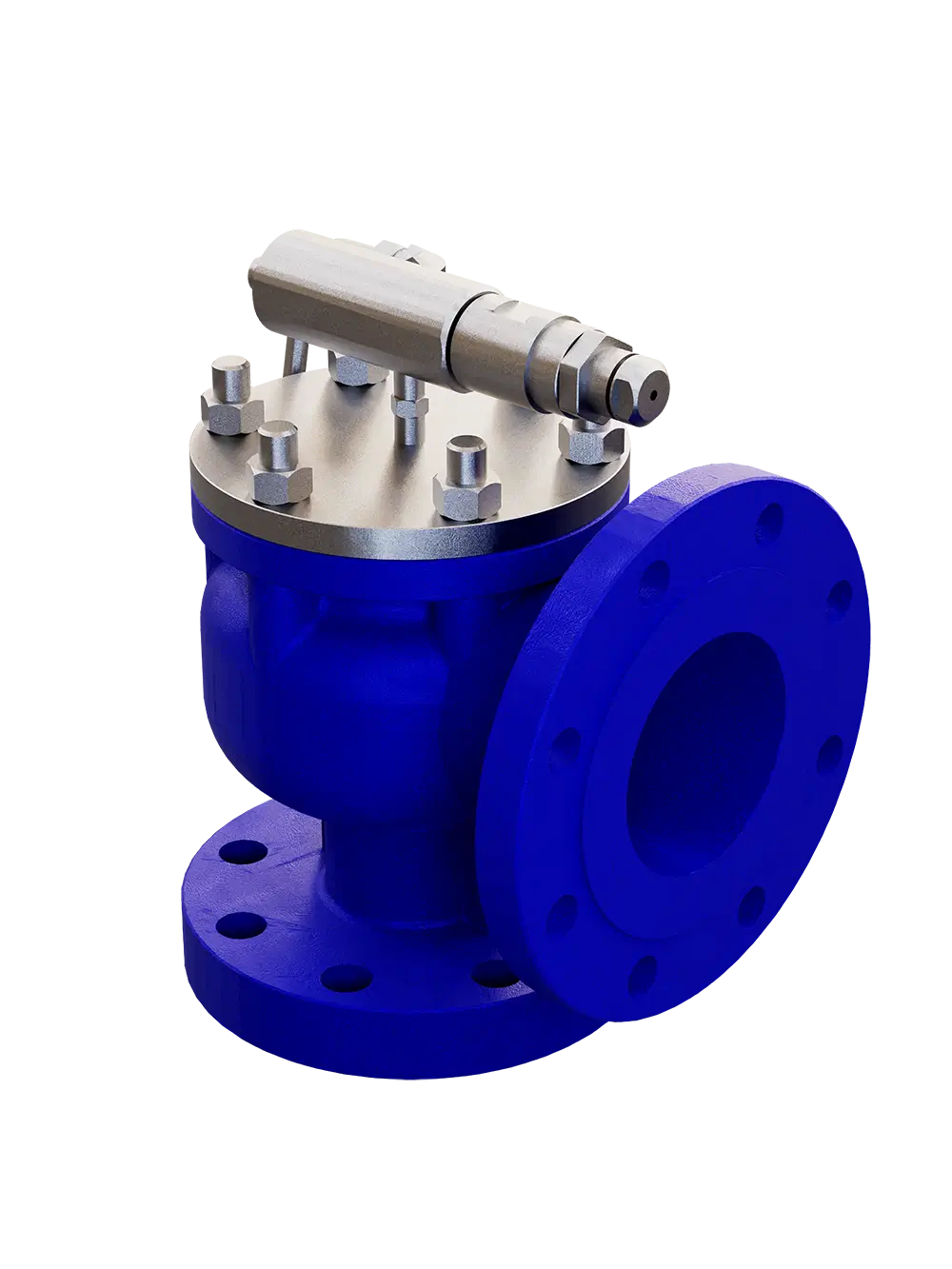
A pilot-operated valve uses an external auxiliary pressure relief valve—called a pilot—alongside the main valve to achieve more precise operation compared to conventional spring-loaded valves.
Explanation
A pilot-operated valve uses an external auxiliary pressure relief valve—called a pilot—alongside the main valve to achieve more precise operation compared to conventional spring-loaded valves.
Types & Standards
- Includes both pop-action and modulating types
- Flanged design based on API 526 standard
- Available in flange classes from #150×150 to #2500×300
- Size range: 1”x2” to 8”x10”
Design Features
- Economical solution for high-precision protection
- Optimized design for minimal inlet pressure loss
- Modular system adaptable to required connection sizes and pressure stages
- Robust construction with low maintenance and easy part replacement
- Short lead times synchronized with safety valve production
- Fully coordinated with certified supplier coefficients
- Tight adherence to set pressure
- Protection of the safety valve against corrosion and sticking
- Tested combinations of safety valve and rupture disc
Applications
- Gas compressor stations
- Refineries
- Petrochemical industry
- Oil & gas facilities
- Tank farms / Tanker vessels
- Pulp & paper industry
- Pumps
Pop-Action & Modulate-Action Difference
Kiatork has two types of pilot-operated safety valves.
Pop-Action: Opens fully at the set pressure with a complete lift.
Modulate-Action: Opens proportionally to the increase in system pressure for a more stable and efficient operating cycle.
Product Details Form
Maintaining pressure within safe limits in industrial systems is essential for protecting equipment, ensuring production continuity, and reducing occupational safety risks. Advanced safety solutions are particularly necessary in applications involving high pressure, variable back pressure, or high discharge capacity. Designed to meet these requirements, a pilot operated safety valve controls the opening and closing of the main valve through a separate pilot mechanism, providing precise and reliable pressure relief performance.
Kiatork develops pilot-operated safety valve solutions tailored to the process requirements of various industries. By combining manufacturing experience with engineering expertise, high-quality materials, and application-specific technical support, Kiatork contributes to the safe and efficient operation of industrial facilities.
As a professional safety valve manufacturer, Kiatork does more than manufacture products. It supports its customers throughout valve selection, sizing, material specification, and after-sales processes. By evaluating each requirement from a technical perspective, Kiatork develops long-lasting, sustainable pressure protection solutions suited to specific operating conditions.
A pilot-operated safety valve is an automatic pressure safety device consisting of a main valve and an auxiliary pilot valve that controls its movement. When the system pressure remains within the normal operating range, pressure is directed to the upper section of the main valve to generate a closing force. This keeps the main valve firmly seated and prevents the process fluid from entering the discharge line.
When the system pressure reaches the predetermined set pressure, the pilot mechanism is activated. The pilot valve reduces the control pressure above the main valve, allowing the main piston or diaphragm to move. The main valve then opens, and the excess fluid is discharged in a controlled manner. Once the pressure falls to a safe level, the pilot mechanism closes again, the control pressure is restored, and the main valve returns to its sealed position.
Thanks to this operating principle, a pilot operated safety valve can maintain stable shut-off performance even when the normal system operating pressure approaches the set pressure. However, for reliable valve operation, the pilot lines, control passages, and related components must be designed in accordance with the process conditions.
The operating principle of a safety relief valve is generally based on the balance between system pressure and the spring force inside the valve. When the inlet pressure exceeds the set opening pressure, the valve disc lifts from its seat and the discharge process begins. This automatic mechanism helps protect equipment against overpressure without requiring operator intervention.
Pilot-operated safety valves can be used in a wide range of industrial applications involving high pressure, high capacity, or variable operating conditions. Oil and natural gas facilities, refineries, petrochemical plants, power plants, chemical production lines, and gas storage systems are among their most common application areas.
Pilot operated safety valve solutions can be used in pressure vessels, pipelines, compressor systems, process vessels, and high-capacity gas lines. Pilot-operated designs can provide significant advantages, particularly in systems operating close to the set pressure and requiring high sealing performance. Products with an appropriate design may also be selected for applications involving variable back pressure.
However, the contamination level, viscosity, and chemical properties of the process fluid must be carefully evaluated during the selection process. Depending on the process conditions, filtration or special design measures may be necessary to prevent particles from affecting the narrow control passages within the pilot mechanism. Kiatork provides technical support by reviewing application data and determining whether the valve is suitable for the relevant process.
Working with a technically competent safety valve supplier is essential for obtaining products that meet specific operational requirements. The supplier should evaluate not only product specifications but also the process fluid, temperature, pressure values, and facility conditions. Kiatork examines application data in detail and provides solutions designed to support system safety and operational efficiency.
One of the primary advantages of a pilot-operated safety valve is its ability to maintain high sealing performance as the system pressure approaches the set pressure. In many designs, the force keeping the main valve closed increases together with the system pressure. This feature helps reduce the risk of leakage in processes where the difference between the normal operating pressure and set pressure is limited.
When selected correctly, a pilot operated safety valve can offer an effective solution for controlling high discharge capacities. As the main valve is controlled by the pilot mechanism, its opening and closing behavior can be configured according to the process requirements. Some designs provide rapid opening characteristics, while others can relieve pressure in a modulating manner.
Models equipped with a suitable pilot design can deliver reliable performance under variable back pressure conditions. In large-scale applications, reducing the need to control the main valve directly with a mechanical spring can also contribute to the development of more compact and efficient solutions. To benefit from these advantages, the product must be correctly selected and sized according to the specific process conditions.
In every safety valve application, the type of discharged fluid, required discharge capacity, and back-pressure conditions must be considered. Opening at the set pressure alone is not sufficient; the valve must also be capable of relieving excess pressure at the required capacity and within the appropriate period. Kiatork evaluates these technical parameters comprehensively to develop reliable product solutions.
The first step in selecting the correct valve is to determine the set pressure, operating pressure, temperature, fluid type, and required discharge capacity. Whether the fluid is a gas, vapor, or liquid directly affects the valve’s operating characteristics and sizing. If the process fluid is corrosive, contaminated, or viscous, the material compatibility of the body, seals, diaphragm, and pilot components must also be carefully assessed.
When selecting a pilot operated safety valve, back pressure conditions, discharge line configuration, inlet pressure losses, and the rate of pressure change within the system must also be considered. The length of the pilot line, connection arrangement, and the method by which control pressure is transmitted to the valve are important factors affecting operating performance. The response characteristics of the pilot system should be evaluated, particularly in processes involving rapid pressure fluctuations.
An incorrectly sized valve may fail to provide sufficient discharge capacity or may operate unstably. Therefore, product selection should not be based solely on connection size and set pressure. Kiatork evaluates technical data in detail and supports customers in determining the appropriate valve design, capacity, and material options.
A safety valve manufacturer providing technical support during the sizing process focuses not only on the nominal connection size but also on the actual discharge capacity of the valve. Variables such as the flow coefficient, pressure loss in the inlet line, and back pressure in the outlet line are included in the calculation. Kiatork’s engineering approach aims to ensure reliable valve performance under the relevant process conditions.
Overpressure in industrial systems may occur for various reasons, including line blockages, control equipment failures, temperature increases, chemical reactions, or fire. Pressure exceeding the allowable limits of the equipment can lead to mechanical damage, fluid leakage, unplanned shutdowns, and serious safety risks.
In such situations, a pilot operated safety valve activates automatically when the set pressure is reached and discharges the excess pressure. Its precise control structure helps maintain the system within a safe operating range, particularly in high-pressure and critical processes. This contributes to the protection of pressure vessels, pipelines, and connected equipment.
To maintain the valve’s reliability, installation instructions must be followed, pilot lines must be kept clean, and regular testing and maintenance must be carried out. Periodic inspections allow potential issues involving sealing performance, set pressure, and the operating mechanism to be identified at an early stage.
Every manufactured safety relief valve should be tested for its specified set pressure and sealing performance. Standards, pressure classes, and testing criteria required by the application must be accurately reflected in the product design. With a quality-focused manufacturing approach, Kiatork aims to deliver durable and consistent solutions that meet the technical expectations of different industries.
Kiatork offers pilot operated safety valve solutions for a wide range of pressure, temperature, and capacity requirements. Its manufacturing processes prioritize precision machining, durability, sealing performance, and material quality. With body and internal component options suited to different process conditions, Kiatork aims to develop reliable solutions for various industrial applications.
Kiatork’s technical support extends beyond product supply. Its experienced team assists customers with reviewing process data, selecting the appropriate product, sizing the valve, determining suitable materials, and evaluating application requirements. This approach helps create a safe, durable, and long-lasting solution compatible with actual operating conditions.
To identify the right pilot-operated safety valve for your facility, obtain detailed information about product specifications, or request a project-specific quotation, contact Kiatork. With its manufacturing experience and engineering-focused approach, Kiatork is ready to provide the right solution for your pressure safety requirements.
A professional safety valve supplier should maintain clear and consistent communication throughout the process, from pre-sales consultation to post-delivery technical assistance. Accurate product selection is important, but timely delivery, complete documentation, and prompt responses to technical questions are equally valuable. Kiatork combines its manufacturing capabilities with a solution-oriented service approach.